Starting a Small Appliance Repair Business in 2026
A practical guide to launching a small appliance repair shop — what to fix, what equipment you need, how to price jobs, and how to get your first customers.
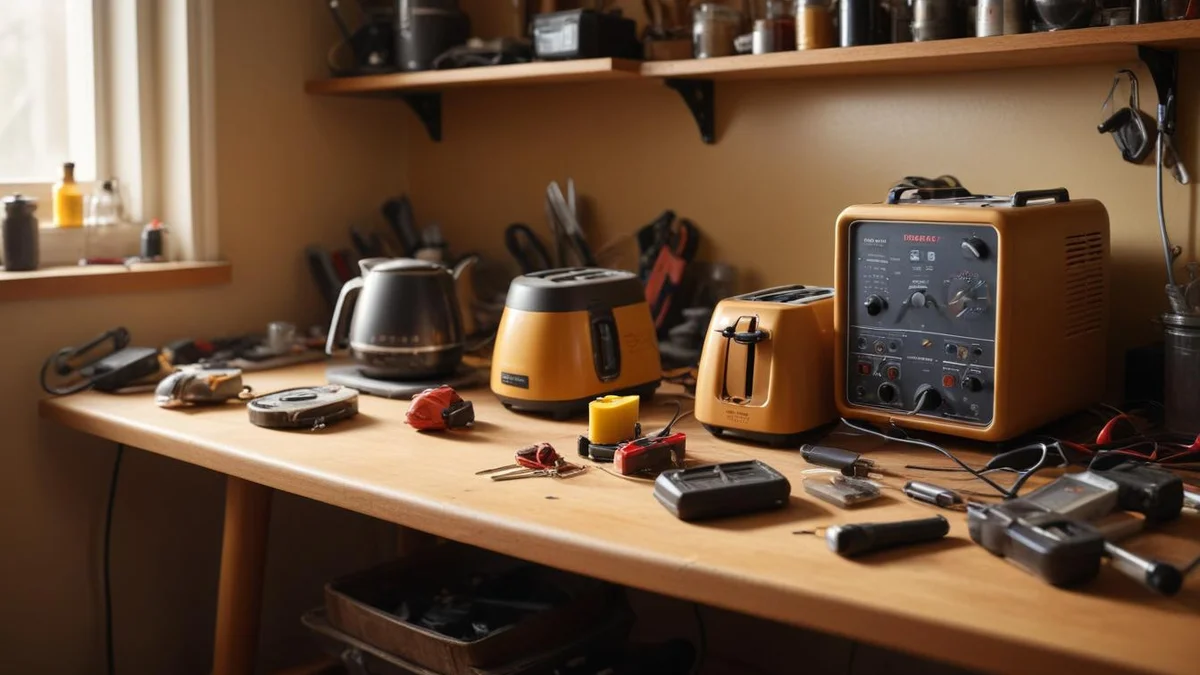
Small appliance repair is one of the most accessible repair businesses to start. Startup costs are low, the tools are affordable, and demand is steady because people would rather pay $80 to fix a $400 vacuum than buy a new one. Here's how to get started, what to expect, and how to build a sustainable business.
Why Small Appliances?
Small appliance repair has several advantages over other repair niches:
- Low barrier to entry. You don't need $50K in diagnostic equipment like auto repair. A good multimeter, basic hand tools, and a soldering station get you started for under $500.
- Steady demand. Vacuums, coffee makers, sewing machines, food processors, stand mixers, and small kitchen appliances break constantly. Every household has a dozen of them.
- Sustainability trend. The right-to-repair movement and growing environmental awareness mean more people are choosing repair over replacement. This trend is accelerating.
- High margins. Parts are cheap. Labor is where you make money. A $15 belt replacement on a vacuum that you charge $65 for is a healthy margin.
- Repeat customers. Someone who gets their KitchenAid mixer fixed will come back when their Dyson dies. Appliance owners tend to own many appliances.
What to Repair (and What to Avoid)
High-Demand, Profitable Categories
Vacuums — The single best category for a new shop. Dyson, Shark, Miele, Kirby. Extremely common, parts are widely available, and most fixes are straightforward (belts, filters, motors, brush rolls). People are emotionally attached to their vacuums and will pay to fix them.
Sewing machines — A niche with devoted customers. Sewing machine owners maintain their machines like car enthusiasts maintain classic cars. Timing adjustments, tension issues, motor replacements. Higher skill ceiling but very loyal customer base.
Kitchen appliances — Stand mixers (KitchenAid gear replacements are bread and butter), food processors, blenders, espresso machines. The espresso machine segment is particularly lucrative — owners of $500+ machines don't blink at a $150 repair.
Small power tools — Overlap with the tool repair market. Handheld drills, jigsaws, sanders. Similar skill set to appliance repair with good margins.
Categories to Approach Carefully
Microwaves — High-voltage capacitors are dangerous. If you're not trained on high-voltage safety, refer these out. The liability isn't worth the $60 repair fee.
Warranty-sealed devices — Robot vacuums, smart home devices, and anything with firmware. Manufacturers actively block third-party repair, and opening the case voids the warranty. You'll get complaints when the customer's app stops working post-repair.
Disposable appliances — $20 toasters, $15 coffee makers. The repair cost exceeds replacement cost. Don't waste bench time on items the customer should just replace.
Equipment and Space
Essential Tools ($300-500 to start)
- Digital multimeter — Fluke 117 or equivalent ($150-200). Your most important diagnostic tool.
- Soldering station — Hakko FX-888D or similar ($100). For circuit board work and wire repairs.
- Basic hand tools — Screwdriver sets (Torx, Phillips, flat, security bits), pliers, wire strippers, heat gun. ($100-150)
- Parts organizer — Bins and drawers for common replacement parts ($30-50)
Nice to Have ($200-500 more)
- Oscilloscope — For diagnosing motor and controller issues. Not essential day one.
- Ultrasonic cleaner — For cleaning small components and carburetor parts.
- Vacuum-specific tools — Belt tools, brush roll removers, hose fishing tools.
- 3D printer — For making discontinued knobs, brackets, and small plastic parts. Increasingly useful.
Workspace
You can start in a garage or spare room. You need:
- A sturdy workbench (at least 6 feet)
- Good lighting (LED shop lights)
- Electrical outlets (you'll be testing appliances constantly)
- Storage shelving for parts and customer items
- A designated area for customer drop-off and pickup
Important: If you're working from home, check your local zoning laws. Many residential zones allow home-based businesses but may restrict customer foot traffic or signage. A simple business license and home occupation permit usually covers it.
Pricing Your Repairs
The Diagnostic Fee Model
Charge a flat diagnostic fee ($25-45) that gets applied to the repair if they proceed. This:
- Compensates you for time on jobs the customer declines
- Filters out people who aren't serious
- Sets expectations before you open anything up
Flat Rate vs. Hourly
Flat rate per repair type is better for appliances. Customers want to know the total cost before saying yes. Build a price list for common repairs:
| Repair | Typical Price |
|---|---|
| Vacuum belt replacement | $35-55 |
| Vacuum motor replacement | $85-150 |
| KitchenAid mixer gear replacement | $95-140 |
| Sewing machine timing adjustment | $65-95 |
| Sewing machine motor replacement | $120-180 |
| Espresso machine descale + repair | $80-150 |
| General circuit board repair | $75-200 |
These prices vary by market. Check what other shops in your area charge. If there aren't any (common for small appliances), you have pricing power.
The 50% Rule
If the repair cost exceeds 50% of the replacement cost, tell the customer. Most will still repair, especially for quality brands, but they appreciate the honesty. This builds trust and referrals.


Getting Your First Customers
Week 1-4: Foundation
- Google Business Profile — Set it up immediately. "Small appliance repair near me" is a high-intent search. Include your address (even if home-based), phone number, hours, and photos of your workspace.
- Facebook Marketplace and local groups — Post that you're open for business. Join local buy/sell/trade groups and community pages. "Does anyone know where to get a vacuum fixed?" posts appear daily in most local groups.
- Nextdoor — Neighbors searching for local services. A single recommendation thread can generate 10+ customers.
Month 2-3: Building Pipeline
- Partner with vacuum and sewing machine retailers. Small shops that sell appliances but don't repair them will gladly refer customers to you. Drop off business cards and introduce yourself.
- Craigslist and local classifieds — Free to post, and people searching for repair services check here.
- Flyers at laundromats, fabric stores, and cooking supply shops — Your customers shop at these places.
Month 3+: Scaling
- Google Reviews — After every successful repair, ask for a review. 10+ reviews with 4.5+ stars puts you at the top of local search results. This is your #1 long-term growth channel. Our guide on getting more Google reviews covers exactly how to ask and when.
- Word of mouth — Appliance repair is hyper-local. Every happy customer tells 2-3 people. Do great work and your pipeline fills itself within 6 months.
- Simple website — Even a single page with your services, prices, hours, and contact info. Customers searching "KitchenAid mixer repair [your city]" need somewhere to land. For more on getting found online, see our local SEO guide for repair shops.
Managing Your Shop
Intake and Tracking
Even as a one-person shop, you need a system for tracking what came in, what's wrong with it, what it'll cost, and when it's done. This can start as a spreadsheet but quickly becomes painful beyond 10-15 active repairs.
Dedicated repair shop software handles:
- Intake tickets with customer info, item details, and photos
- Status tracking so you know what's on your bench
- Customer notifications so they're not calling you for updates
- Invoicing with parts and labor line items
- Payment processing so customers can pay when they pick up
Parts Sourcing
Build relationships with 2-3 reliable parts suppliers:
- Manufacturer direct — Best for brand-specific parts (Dyson, KitchenAid). Usually requires a business account.
- Aftermarket suppliers — Amazon, eBay, specialty parts sites. Faster shipping, lower cost, but verify quality.
- Salvage — Keep dead appliances for parts harvesting. A broken Dyson DC65 has $50-100 in usable parts.
Turnaround Time
Set expectations clearly. Most small appliance repairs should be 3-5 business days or less. Same-day service for common fixes (belt replacements, filter swaps) is a competitive advantage that justifies premium pricing.
If you're waiting on parts, communicate the delay immediately. The #1 complaint in appliance repair is shops that sit on items for weeks without updates.
Financial Expectations
Revenue Ramp
A realistic ramp for a solo operator:
- Month 1-2: 2-4 repairs/week, $200-500/week revenue
- Month 3-6: 5-10 repairs/week, $500-1,200/week revenue
- Month 6-12: 10-20 repairs/week, $1,000-2,500/week revenue
- Year 2+: 15-30 repairs/week, $1,500-4,000/week revenue
Expenses
Monthly overhead for a home-based solo operation:
| Expense | Monthly Cost |
|---|---|
| Parts inventory | $200-500 |
| Software (shop management) | $99-150 |
| Insurance (general liability) | $50-100 |
| Supplies (solder, cleaning, etc.) | $30-50 |
| Marketing (Google Ads, flyers) | $50-200 |
| Total | $430-1,000 |
You can be profitable within 2-3 months if you're doing 6+ repairs per week.
Common Mistakes to Avoid
- Taking on everything. Specialize in 3-4 appliance categories before expanding. Jack-of-all-trades shops struggle with parts inventory and expertise.
- Underpricing. New shops set prices too low trying to win customers. Your time is worth $60-100/hour. Price accordingly.
- No diagnostic fee. You'll waste hours diagnosing items that customers abandon. Always charge for your time.
- Hoarding customer items. Set a clear pickup policy. Items not picked up within 30 days get a storage fee. Items not picked up within 90 days become shop property. Put this in writing at intake.
- Skipping insurance. General liability insurance is $500-1,200/year. One customer claiming you damaged their $800 espresso machine and you'll wish you had it.
The Bottom Line
Small appliance repair is a solid, low-risk business with real demand. Start small, specialize, price fairly, and let your reputation build. The shops that succeed are the ones that communicate well, turn repairs around fast, and make it easy for customers to pay and pick up. Setting up QuickBooks for appliance repair from the start keeps your finances clean as volume grows. Everything else is just refinement.
Related
Industry
Small Appliances
Vacuums, sewing machines, mixers
Industry
Electronics & Mobile
Phones, tablets, laptops, game consoles
Comparison
Bench vs Housecall Pro
Comparison
Bench vs mHelpDesk
Pricing
Bench Pricing
Plans from $99/month
Guide
Outdoor Power Equipment: Surviving the Seasonal Rush
Guide
Starting a Commercial Equipment Repair Business
Guide