Starting a Commercial Equipment Repair Business
Commercial equipment repair serves restaurants, salons, and offices. Higher ticket values, longer relationships, and consistent demand.
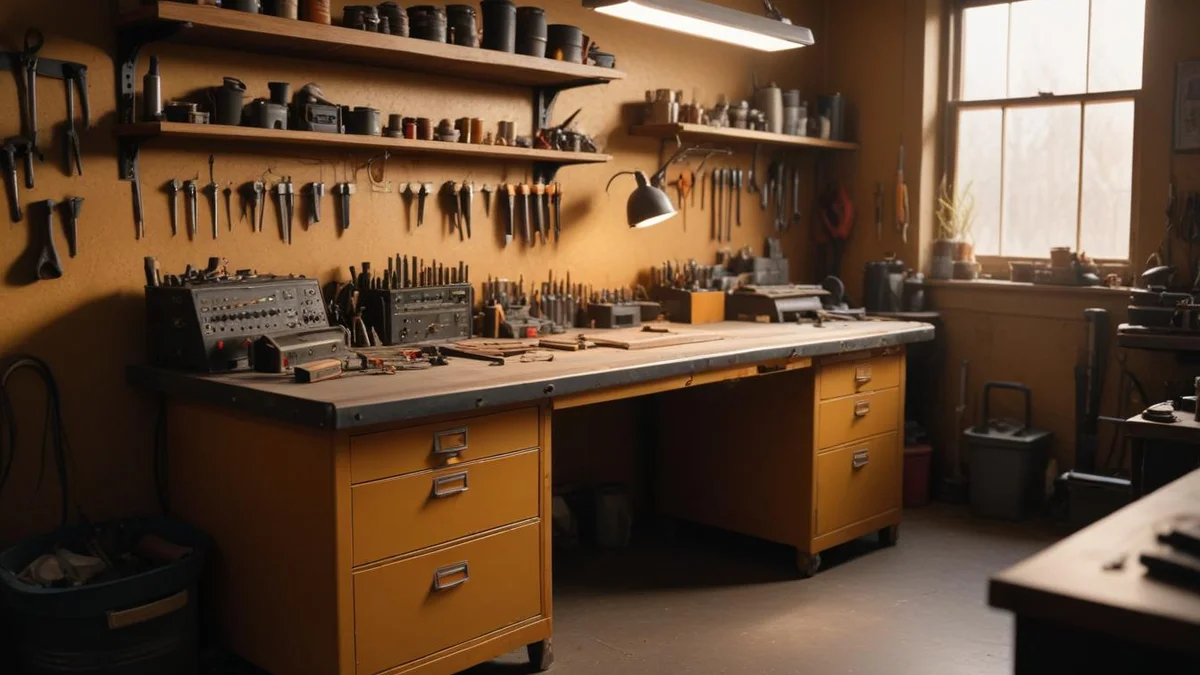
Commercial equipment repair is a different game than consumer repair. The ticket values are higher — often $500-5,000 per job. The relationships are longer — a restaurant that trusts you with their kitchen equipment becomes a client for years. And the demand is consistent — commercial equipment runs hard, breaks down regularly, and businesses cannot afford downtime.
If you are thinking about starting a repair business or expanding into commercial work, this guide covers the opportunity, the requirements, and how to build a sustainable operation.
Types of Commercial Equipment
"Commercial equipment" is a broad category. Here are the main verticals, each with its own characteristics:
Restaurant and food service
This is the largest commercial repair market. Every restaurant, cafeteria, food truck, and catering company depends on equipment that runs 12-16 hours a day.
- Cooking equipment. Commercial ovens, fryers, grills, steam tables, ranges. Gas and electric.
- Refrigeration. Walk-in coolers, reach-in refrigerators, prep tables, ice machines. Refrigeration repair is high-demand and high-margin.
- Dishwashing. Commercial dishwashers, glass washers. These break frequently under heavy use.
- Small appliances. Food processors, blenders, slicers, mixers (think KitchenAid commercial, Hobart).
Salon and spa
Hair salons, barbershops, nail salons, and spas use specialized equipment that most general repair shops cannot service.
- Styling chairs and hydraulic bases. Hydraulic cylinder replacements, base repairs.
- Hair dryers and hood dryers. Heating element replacements, motor rebuilds.
- Autoclaves and sterilizers. Essential for health code compliance. When these break, the salon cannot legally operate.
- Massage tables and spa equipment. Electric lift mechanisms, heating pads.
Janitorial and cleaning
Property management companies, cleaning services, and facilities departments need equipment serviced regularly.
- Commercial vacuums. Upright and backpack vacuums, carpet extractors.
- Floor scrubbers and buffers. Battery-powered and corded models.
- Pressure washers. Commercial-grade units that run daily.
Office and business
- Shredders. Commercial cross-cut and industrial shredders.
- Laminators and binding machines.
- Printers and copiers. Though this market is shrinking, service contracts on commercial printers still exist.
Why Commercial Repair Is Lucrative
The economics of commercial repair are fundamentally different from consumer work. Here is why:
Higher ticket values
A consumer brings in a $200 drill and you charge $80 to repair it. A restaurant brings in a $3,000 commercial mixer and you charge $400-800 to rebuild it. The parts cost more, but so does the labor rate — and the customer does not blink because the alternative is buying a $3,000 replacement.
Typical commercial repair pricing:
| Equipment | Common Repair | Your Price | Parts Cost | Time |
|---|---|---|---|---|
| Commercial mixer (Hobart) | Gear replacement | $400-700 | $80-200 | 2-4 hrs |
| Walk-in cooler | Compressor replacement | $800-1,500 | $300-600 | 3-5 hrs |
| Commercial oven | Igniter + thermostat | $300-500 | $50-150 | 1-2 hrs |
| Ice machine | Cleaning + valve repair | $200-400 | $30-80 | 1-2 hrs |
| Floor scrubber | Battery + motor service | $300-600 | $100-250 | 2-3 hrs |
| Commercial vacuum | Motor rebuild | $150-300 | $40-80 | 1-2 hrs |
Recurring revenue
Consumer repairs are one-and-done. Commercial equipment needs regular maintenance. An ice machine should be cleaned and serviced every 6 months. A commercial oven needs annual calibration. A floor scrubber fleet needs quarterly battery checks.
This creates maintenance contracts — predictable, recurring revenue. A single restaurant with 10-15 pieces of equipment might pay you $200-400/month for a maintenance agreement. Ten restaurants on maintenance contracts is $2,000-4,000/month in guaranteed income before you fix a single breakdown. Maintenance contracts are also one of the best customer retention strategies for repair shops.
B2B payment reliability
Consumers sometimes dispute charges or ghost on an invoice. Businesses pay their bills — especially when you are the person keeping their kitchen running. Net-30 terms are standard in commercial work, and businesses that depend on you do not risk the relationship over a disputed invoice.
Less price sensitivity
A restaurant losing $2,000-5,000/day in revenue because their walk-in cooler is down does not haggle over a $1,200 repair bill. They want it fixed now. Commercial customers value speed and reliability over price. This is a fundamentally different dynamic than consumer repair, where customers comparison-shop for the cheapest screen replacement.
Startup Requirements
Commercial repair has a higher barrier to entry than consumer electronics or power tool repair. Here is what you need:
Certifications
- EPA Section 608 certification. Required for any work involving refrigerants (coolers, freezers, ice machines, HVAC). Get your Universal certification — it covers all equipment types. Cost: $20-30 for the exam.
- Gas appliance certifications. If you service gas-fired equipment (ovens, ranges, fryers), many states require specific licensing. Check your state's requirements.
- Food equipment sanitation. Not always legally required, but CFESA (Commercial Food Equipment Service Association) certification signals professionalism to restaurant clients.
- Electrical licensing. Some states require an electrician's license for certain commercial electrical work. Others allow appliance repair without one. Check local codes.
Insurance
Commercial work demands more insurance coverage than consumer repair:
- General liability: $1-2 million minimum. Some commercial clients require this as a condition of doing business with you.
- Professional liability (E&O): Covers claims that your repair caused equipment failure or business losses.
- Commercial auto: If you do on-site service calls (and in commercial, you almost always do).
- Workers' comp: Required once you have employees, and essential when your techs are working around heavy equipment, gas lines, and electrical panels.
Budget $2,000-5,000/year for commercial repair insurance, depending on your revenue and service scope.
Tools and equipment
Beyond standard hand tools, commercial repair requires:
- Refrigerant recovery equipment. $500-1,000. Required by EPA for any refrigerant work.
- Manifold gauge set. $100-200. For diagnosing refrigeration systems.
- Combustion analyzer. $300-500. For gas appliance diagnostics and safety verification.
- Electrical testing equipment. Megger (insulation resistance tester), clamp meter, thermocouples. $200-500 total.
- Service vehicle. A van or truck equipped for on-site repairs. This is your biggest single expense — $15,000-30,000 used, or $300-600/month for a lease.
- Specialty tools. Each equipment category has specific tools. Hobart mixer repairs require specific pullers and wrenches. Refrigeration work needs flaring tools and vacuum pumps.


Pricing Commercial Work
Commercial pricing works differently than consumer repair. Two models dominate:
Hourly rate plus parts
The most common approach. Set an hourly labor rate — $85-150/hour is typical for commercial equipment repair, depending on your market and specialization. Refrigeration and gas work command the higher end.
Add parts at cost plus markup. Standard markup is 30-50% on parts. A $200 compressor becomes $260-300 on the invoice. For more on structuring labor rates and margin targets, see our guide on pricing labor for your repair shop.
Example invoice:
Walk-in cooler — compressor failure
- Diagnostic: 1 hour @ $125/hr = $125
- Compressor replacement: 3 hours @ $125/hr = $375
- Compressor (Copeland ZP34): $450 (parts)
- Refrigerant (R-410A, 8 lbs): $120 (parts)
- Total: $1,070
Emergency and after-hours premiums
Commercial equipment failures do not respect business hours. A restaurant's walk-in cooler dies at 10 PM on a Friday with $8,000 in food inside. They will pay a premium for emergency service.
Standard emergency rates:
- After-hours (evenings/weekends): 1.5x your standard hourly rate
- Emergency (same-day, drop-everything): 1.5-2x your standard rate
- Holiday: 2x your standard rate
Be upfront about these rates. Commercial clients understand and accept emergency pricing — they just want to know the number before you dispatch.
Maintenance contracts
This is where the real business stability comes from. Structure maintenance contracts as monthly or quarterly fees that cover:
- Scheduled preventive maintenance visits
- Priority scheduling for breakdowns
- Discounted labor rates for contract customers (10-15% off standard rate)
- Parts at reduced markup
A typical restaurant maintenance contract covers quarterly visits to service all equipment for $150-350/month. The restaurant gets predictable costs and priority service. You get guaranteed recurring revenue and first call when something breaks.
B2B Account Management
Commercial clients operate differently than walk-in consumers. You need to accommodate how businesses buy:
Net-30 payment terms
Businesses do not pay at the counter with a credit card. They receive an invoice and pay within 30 days. This is standard and expected. If you do not offer Net-30, many commercial clients will not work with you.
The trade-off: you need working capital to cover 30 days of parts costs and labor before getting paid. Budget for this. A shop doing $20,000/month in commercial work needs $15,000-20,000 in working capital to cover the payment gap.
Purchase order numbers
Many businesses require a PO number on every invoice. Their accounting department will not process payment without it. Your invoicing system needs to support PO numbers as a standard field.
Multiple contacts per account
The person who calls for service is not always the person who approves the invoice. A restaurant might have the kitchen manager calling you, the general manager approving repairs, and a corporate accounting department processing payments. Track all contacts per account.
Service level agreements
Larger commercial clients may want a written SLA: guaranteed response time (2-4 hours for emergencies), maximum downtime commitments, scheduled maintenance windows. These agreements formalize the relationship and justify premium pricing.
Building Your Client Base
Commercial clients are harder to win and harder to lose than consumers. One good relationship can generate $5,000-20,000+ per year in revenue. Here is how to build your base:
Property managers and management companies
A single property management company might manage 50-100 commercial properties — restaurants, salons, offices — all needing equipment service. Win the management company and you have access to all their tenants. Reach out directly, offer a competitive rate sheet, and deliver consistently.
Restaurant groups
Many restaurant owners operate 3-10+ locations. Fix one kitchen, and you become the go-to for all of them. Ask happy clients for introductions to other locations.
Equipment dealers
Commercial equipment dealers sell new equipment but often do not handle repairs. Build a referral relationship — they send you repair work, you recommend them when a client needs new equipment.
Industry associations
Join your local restaurant association, chamber of commerce, or facilities management groups. These are where commercial decision-makers network.
Start with what you know
If you have experience with one equipment type, start there. A refrigeration tech who goes independent can build a full client base from restaurant cooler and ice machine work alone. Once you are in the door, you can expand to other equipment categories.
Software for Commercial Repair Tracking
Commercial repair has specific software needs that consumer-focused tools often miss:
- Account-based management. Track businesses as accounts with multiple contacts, locations, and equipment lists — not just individual customers.
- Equipment records. Every piece of commercial equipment should have its own profile: make, model, serial number, installation date, service history, warranty status.
- Maintenance scheduling. Recurring service visits need to be tracked and scheduled automatically.
- Invoicing with PO support. Generate professional invoices with PO numbers, Net-30 terms, and line-item detail.
- Service call dispatching. When a client calls, you need to assign a tech, schedule the visit, and track time on-site.
- Reporting by account. Revenue per client, service history per equipment, profitability by job type.
Bench supports commercial workflows with account management, equipment tracking, detailed invoicing with PO numbers and Net-30 terms, and service history across multiple locations. For a commercial repair operation, having all of this in one system — instead of juggling spreadsheets, a calendar app, and a separate invoicing tool — is the difference between organized growth and operational chaos.
The Opportunity
Commercial equipment repair is not a quick-start, low-investment play like phone repair. It requires certifications, heavier insurance, a service vehicle, and working capital for Net-30 terms. But the payoff is substantial: higher margins, recurring revenue, stable B2B relationships, and a market where demand never drops because businesses always need their equipment running.
If you are technically skilled, reliable, and willing to invest in the upfront requirements, commercial repair is one of the most sustainable paths in the repair industry. Start with one vertical, build your reputation through consistent service, and grow from there. Setting up QuickBooks for your repair shop early will make it much easier to manage Net-30 invoicing and track profitability by account.